THE FUTURE IS RUSHING UPON US

We're in for a wild ride. Exponentially accelerating technological, cultural, and socioeconomic evolution means that every year will see more developments than the previous one. More change will happen between now and 2050 than during all of humanity's past. Let's explore the 21st century and ride this historic wave of planetary transition with a confident open mind.

Showing posts with label recession. Show all posts

Wednesday, June 3, 2009

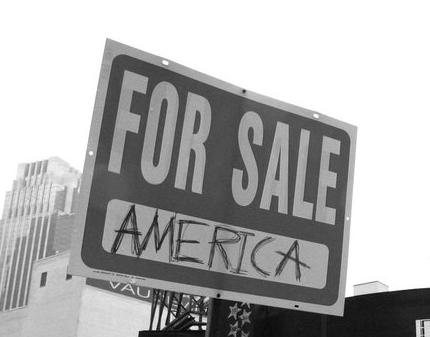
America is for Sale


General Motors and the road to foreign corporate take over of domestic assets


It appears that a little known medium sized Chinese car company, Tengzhong, has acquired the Hummer brand and its American based production facilities. Although there are doubts on how effectively it will run the operation, the fact remains that foreigners will be trying to improve on the quintessential icon of gas inefficiency and resell it back to Americans. Considering that Tengzhong wants to enter the military market to sell hardware to Chinese military, Westerners buying the new Hummers will be indirectly improving effectiveness of Chinese military-industrial complex. Before the stock market crash, the Hummer brand was in the lowly 500-700 million dollar range due to high oil prices. In post-crash America, the Chinese were able to acquire it for about 100 million which is nothing since Chinese state banks often help fund such strategic purchases through favorable loans.

Details are now emerging about the sale of GM's European branch and biggest car company in Europe, Opel. GM's bankruptcy shifted company's resources to core American based assembly lines. Federal authorities will try to engage in rapid retooling of GM's surviving industrial core for production of next generation electric exports. In the meantime, all the assembly lines, car models, and remaining infrastructure will be sold off. Opel has been acquired by a coalition of Sversbank ( a Russian state bank), Magna ( a Canadian car parts company), and German workers unions with help from the German federal government. Last year, Opel opened a brand new car production line near St. Petersburg hoping to make money from growing sales in a booming oil economy. What ended up happening is that the government of the target economy now has controlling stake in Opel itself with access to all its infrastructure in Europe and with political support from Berlin. By creating a coalition of mutual interests of corporations and governments of America's allies, Moscow was able to swallow up GM's main expansion at incredibly low historical price. Chinese will undoubtedly follow such an example in trying to acquire American corporate infrastructure in their part of the world.

It seems that the Sino-Russian goals are rapidly moving beyond attracting foreign companies to open factories on their land to reduce import monetary outflow and create jobs. Increasingly, it seems that creating incentives for foreigners to open factories in China and Russia was the first step towards long term increase of intracorporate influence. This was best demonstrated when the British oil company, BP, made a partnership with Russian oligarchs by creating an expansion TNK-BP. It didn't expect that a few years down the road their partners will wrestle away control of the expansion and then do what they like with it. This situation twists the arm of the original investor. Since the expansion is not being crudely nationalized in the style of Hugo Chavez, the investor is still receiving increasing profits. Selling the expansion would cut off the flow of profit and allow the natives access to expensive infrastructure at fire sale prices. Sunken costs are too great of a motivator. Profit based strategy requires keeping of the expansion and even increasing technological and expert aid to make sure the rogue branch prospers. TNK-BP is now the third largest oil company in Russia and in the process of opening up brand new oil fields. As its wealth rises, its management will continue to have access to cutting edge technology from the parent company as well as increasing ability to buy Western technical/managerial talent and overall company shares.

GM and Opel show that it is possible for Chinese and Russian societies to compete without necessarily starting from scratch and creating their own technologically advanced international giants. All they have to do is acquire state aid for a large enough company that can make a domestic partnership with a foreign company's expansion. This process creates a very profitable expansion that is under control of governments working towards a multi-polar world. It allows not just rapid technological transfers and business know-how but indirect influence over Western governments through corporate proxies. Major industrial giants will pressure their respective governments to go easy on Beijing and Moscow in terms of protectionism, trade, and geopolitical policy. The recession has shown that the final strategic outcome of this can be full take over of Western corporations from within and on their own soil. Once Chinese and Russian corporations (that are often directly tied to their country's military-industrial complex) employ sufficient numbers of American workers and have sufficient mutually interested American allies in the corporate world, their influence would be very difficult to counter. United States and British governments are not structurally designed to counter corporate influence and they don't have enough monetary savings to effectively counter corporate influence even if they had the will.

Conceivably it is very possible for America's geopolitical competitors to buy out and then dismantle American infrastructure citing reasons of "inefficiency". This was a tactic done by General Motors in its early heady days when it bought railroads and trains just to dismantle them and promote its own cars and buses as the best transportation method. Unlike such sabotage being done by a domestic company, possible future sabotage would be done by Chinese (who still have not forgiven American led NATO for killing a million of their men during the Korean War and funding of Chiang Kai Chek during the civil war) and Russians (whose last 5 years focused primarily on systematic multifront revenge for NATO's betrayal in the 1990s).

Over 20% of American steel industry is already primarily owned by Russian steel firms led by Oleg Deripaska. This foot in the door occurred with first cheap sales of steel and then joint take overs of mills and processing facilities on American soil with local corporate partners. The subsequent investment and creation of jobs, combined with American oligarchal allies, allowed influence over local and state governments for further expansion.

Last year, George Bush has signed a deal allowing Russian mining companies to sell uranium to US nuclear plants for the first time in history. The same process that occurred with steel is about to be repeated within a strategic sector necessary for nuclear weapons manufacture. Chinese have not yet made similarly disturbing moves ( from the perspective of nationalist geopolitical survival), although they have twice as much money as the Russians to play around with. This is perhaps because their intracorporate take over attempts will be within the irreplaceable computer and bio-pharmaceutical sectors. After all, important mineral wealth can always be acquired from other sources but a Chinese take over of a company like IBM would allow rapid international rise in prestige.

As of today, America's strategic enemies are rapidly isolating US economy by making alliances with Japanese, Canadians, Persians, Arabs, Germans, French, Indians, and South Americans. Both Beijing and Moscow however will need to act quickly enough to transfer enough technology and wealth out of United States before the depression born nationalist fervor allows for US Federal government to nationalize or otherwise counter foreign influence. It is not yet known what degree of foreign ownership of key industrial and resource sectors the American public will tolerate.

Stumble Upon Toolbar

Tuesday, May 26, 2009

Economic Collapse: Debtors Benefiting from Severe Inflation, Government Helping Forgive Debts to Avoid Brain Drain, and Gold Triumphant

1970s-1990s transfer from industrial to financial capitalism created an economic system that is increasingly incapable of meeting demands of all segments of the population. Solid possibility of unsustainable inflation can be countered with buying gold.


Military elites do not wish a massive brain drain of professionals fleeing this country to avoid 21st century indentured servitude of debt repayment (since ability of the military to exercise power abroad slackens). In the coming years, there will be increased intra-elite infighting concerning massive debt forgiveness for 20% of population who fancy themselves as middle class. There will also be a silver lining for those Americans who use their remaining currency to buy mass amounts of precious metals rather than pay off their debts.

Lets do a cost-benefit analysis of a student loan repayment scenario and see if any life gains can be made from devaluation of the dollar. Lets say you have a couple thousand dollars. Lets say you happen to have acquired 10,000 dollars in student loan debt through financial aid/Stafford. Whether you have the subsidized or need based unsubsidized fixed interest rate is immaterial for this scenario. The point is that you have a fixed rate for a loan to repay over a decade or so. Lets use the locked rate of 5%. What should one do in a country where: 1) the national debt burden is 2.5 as heavy as before Great Depression 2) 3 of the 5 oldest financial pillars (like Merrill Lynch) have collapsed within months and 3) the government decided to sharply increase the debt to start gradually escalating restructuring efforts?

There's 2 big options:

Option A:

Pay a minimum every month ($106 for standard repayment or $70 graduated) for a few years and then repay the whole thing rapidly in chunks. Since doing minimum payment for 10 years would be $2,730 in interest for standard or $3,250 in graduated, one thus saves a few thousand dollars. However rapid repayment involves losing thousands of dollars early on in one's life that can be invested elsewhere.

Option B:

Put the loan repayment on automatic billing and treat it like a utility for 10 years and in the end pay $12,730 for standard repayment or $13,250 for graduated.

Which is better?
For answer lets take "normal" American inflation rates into account. If you had $10,000 in 1999 and kept them under the mattress for 10 years you'd lose 25% of their value by the end of 2007. You can play around with various online inflation calculators and see. In other words, same product that cost $10,000 dollars in 1999 would cost $12,500 dollars in 2007. Of course that's assuming the product is not afflicted by deflationary effects of technological breakthroughs in production as occurs with computer hardware. American college education definitely doesn't fit into that product category after the 1970s-1990s transition from industrial state capitalism to financial state capitalism. Demand for better quality of life through increase in both quality and quantity of education, medical care, transport, safety nets is prevented from being met by the architectural design of the current political-economic system. In 2006 to 2007 for example, the average cost of tuition for public college has risen 5.6%, whereas 10 dollars today buys exponentially more computing power than 10 dollars a decade ago.

The full cost of the Stafford loan over a 10 year monthly minimum repayment is historically the same as paying it out all at once. There is a strong possibility that the dollar will lose 15% of its value or more by the end of 2009. Potential of even greater inflationary trends in the future are great for anybody who owns debt as long as they can restructure their interests. There is no logical reason whatsoever to give more money than you have to to banks working with financial aid organs. There is a solid chance that the near future US government will not only help restructure interest payments on many house mortgages/college loans but that it will make financial sector forgive all the loans completely.

Government assisted debt forgiveness makes strategic sense to preserve social stability. The Americans who fall into the 20% of population that are sufficiently educated and wealthy to call themselves "middle class" (but not wealthy enough to be in the 2% politically connected oligarch class ) pose the highest risk of emigration, mass capital outflow, and brain drain to Europe. Politically unconnected homeowners who lose not just their life savings but their shelter and neighborhoods are a huge threat to federal control. It'd make post-default recovery efforts towards German style industrial capitalism much more difficult. Obama administration must gradually nationalize the finance sector through making some finance oligarchs believe he is just collaborating with them. That will allow mass national debt forgiveness when the time comes for dollar default. The looting and capital outflows done by top 1% cannot be avoided but social stability and political support from homeowners can be preserved to allow greater restructuring in the future. Whatever micro and macro level political-economic architecture US will have by 2020, thousands of gated communities, suburbs, towns, and small cities must not be allowed to disappear over night. Proper handling of debt forgiveness will allow their disappearance to be gradual as brain drain to Europe will be reduced and redirected a bit towards major US cities.

Best way of investing one's cash right now is buying as much physical precious metal as possible. Under inflation of the last decade 10 thousand dollars now buys 25% less while an ounce of gold buys a bit more. As a hypothetical example lets use the unusually high annual inflation rate (since it occurs during a major economic crisis) range of 20-40% over 3 years. If the price of acquiring the same model bicycle for urban transport,goes from 200 dollars in 2009 to $345-$548 dollars in 2011, then an ounce of gold will allow one buy the bike for a profit. Of course we see how an ounce of gold also allows to buy 2-3 bikes simultaneously so extra bikes can be exchanged for bulk food and other objects. Financial organizations like TD bank are already encouraging people to exchange their coins for cash without fees. If large players are already undertaking copper hoarding (to exchange for Euros in the future and maintain status as a "bank"), then small players should get on the act while sucker's rallies keep gold/metals price within reach.

The uncharacteristically political and obvious recent suppression of gold advocates like Ron Paul ( as well as federal raiding of liberty dollar makers and similar precious metal organizations ) demonstrates a couple of things. The decades long mass oligarchic looting and exploitation of bottlenecks created by post-industrial capitalist structure was meant to accelerate in 2008. It also shows that oligarchs are split into the rooted domestic faction and cosmopolitan mobile one. The domestic ones (with their company infrastructure rooted/reliant on being within national borders) hope to collaborate with and use the might of the federal government for further enrichment as before. The international ones, the ones that will emigrate to Western Europe, plan on making money on the collapse of US itself by properly timing mass transfer of resources. It's in international faction's interest to properly time bulk metal buys while they join forces with the feds in draining national faction's wealth in a few bursts.

US industrial peak has been passed long ago but financial capitalism kept the appearance of GDP growth and psychological associations of that with material and quality of life improvements. The focus on stock maximization rather than fine tuning industrial capitalism to improve population's quality of life has created infrastructure that cannot qualitatively materially improve the needs of the entire population. CIA analysts have shown that growth of a certain industry doesn't necessarily mean efficient proper allocation of resources and social stability. Oligarchs who pressured the federal government to borrow from China and maintain the illusion of prosperity know full well that one can borrow, not necessarily repay, and be well off. Chinese leadership knew this perfectly as well but didn't care since it allowed them to rapidly expand real industry. Chinese government has done what Lenin wanted, have the capitalists sell the rope with which Chinese can hang them.

Every dollar that can practically be used to buy tangibles (like precious metals) should be used for that purpose instead of further payments to macro parasites and middlemen. The realization that having a perfect credit history is not the most important thing in the world will be reached by US government soon. Americans need to start realizing that too considering the seriousness of the economic paradigm shift.

Stumble Upon Toolbar

Saturday, May 23, 2009

Future of NATO: Europe's Security Requires That Germany and France Take Charge

US style minimal state capitalism has proven to be structurally unstable and ideologically bankrupt. As Obama tries a domestic top down restructuring to save remnants of capitalism before the dollar defaults, central European region is left destabilized.


The process of wrestling NATO's control away from the Anglo-American partnership should start immediately while the international recession is relatively young. American economic collapse is forcing US leadership to copy its former ideological colonies of Germany and Japan when it comes to implementing state capitalism. That in turn will result in a power vacuum created in central Europe and major risk involving NATO's structure the way it is led presently.

US always had elements of state capitalism although private sector was far less regulated compared to US's more state centered ideological colonies in Western Europe. However, decades of de-industrialization, social/structural decay, and military build up brought the need to accelerate ideological compromise. We now see an American president insist on the need for state champions in energy and car production as well as utilization of state organs to shape private sector development. US still has what it takes to pull that off peacefully. If De Gaulle's France and Putin's Russia managed to create successful state backed champions under conditions bordering on civil war then Obama's America can do the same.

There is sufficient amounts of managerial experience and efficiency enforcement talent to be found domestically. Subsidizing cars and green energy will do for those industries what subsidies for agriculture did. That is, create industrial base for mass cheap exports abroad after years of hard work and political coalition pressure. That will take time however and in the meantime it makes strategic sense to extend state capitalism to biomedical, natural resource extraction, electronics, and agriculture sectors. These three fields, have the most potential for economic stimulation since they are one of the few things US still has an edge on internationally. American oligarchic demands and semi-privatized medical system have created the most advanced pharmaceutical and bioengineering research and development in the world. Bioengineering, organ growing, genetic modification, and resulting transhuman augmentation and life extension, are the best potential kernels of a new American economy. As such, if US government wants to take serious stabilizing steps to save bits of the old capitalist system, it needs to nurture, subsidize, and promote the biomedical sector the way it wants to with the car industry. Biomedical product exports are potentially worth trillions of dollars long term, especially if Koreans and Japanese can be brought aboard as collaborative partners.

If Obama administration is smart and wants to really make US economic decline gradual (rather than sharp and potentially violent), it will also use increasing state capitalism to try to catch up or collaborate with Japan in robotics. A friendly US-Japanese competition in robotic exports, to aging Europe, will bring additional stream of steady revenue to claw out of future dollar default. State control of agriculture and resource extraction is self explanatory when it comes to additional money for disgruntled desperate population. Global warming will allow more land cultivation for crops and the land is rich in coal, uranium, and gas (especially if Canada is brought on board to collaborate in Arctic exploration/extraction). Obama has taken the first steps of taking control of strategic sectors and the pace of state acquisition will accelerate. Proper state subsidies and investments must be made immediately so the lifeline industries are nurtured before the default on the dollar occurs.

How does this relate to central Europe? Central European states have embraced American style free market capitalism with open arms. Legions of US capitalist commisars have flown to educate the fresh faced leaderships of Baltic states and dissolved Warsaw pact members. The Soviet collapse has been so rapid and demoralizing that the ideology of minimal state capitalism has taken root deeply and broadly as far as the core states of the former Soviet Union itself. In many ways, central Europeans even outdid their American teacher (and new NATO master) in terms of lack of regulation, taxation, and lack of investment in real industry. The supposed success stories, of minimal state capitalism, have been shown in nearly double digit growth rates throughout the former socialist space. The small Baltic countries have shown their proud ability to stand tall next to other speculative paper tigers of Ireland and Iceland. Even the normally cautious American satellite of Germany got into the housing bubble creating action in the 1990s. Supposed post-industrial financial wizardry was so visible, that in 2003 Donald Rumsfeld even proposed to make central Europe the new ideological arm of American power projection.

Germany and France were no longer seen as reliable footholds to violently spread capitalism throughout the world. Franco-German leadership of Chirac and Shroeder were fine with the split between US and Western Europe since it allowed them to pursue their own independent state capitalism with European characteristics. They decided that US lacks the industrial production to continuously exert influence in central Europe. Leading Western European leadership decided to gradually play Americans and Russians against each other while competing with US and Russians in central Europe when it comes to financial investment. With no massive global ideological alternative to warn of the risks, even the neutral well managed Swedish banks poured money into"New Europe" states like Hungary and Latvia.

When the underutilized communist built infrastructure once again reached full capacity (and when a run on the banks collapsed structural pillars of American union's capitalism), central Europe went into an even deeper tailspin than United States. Not only did the ideology preached to them by America failed but now America itself is heading into the state capitalist direction of Germany, France, and Russia. We saw what happens when the core of an ideology promoting empire changes direction. The power elites of peripheral colonies (even those within the empire sponsored military alliance) often become disillusioned, demoralized, and run into increasing conflict with their own population. Khrushchev's thaw caused social unrest and colonial rebellion. Then of course Gorbachev's top down restructuring and liberalization didn't just pressure ideological satellites to split and pursue their own political development. It didn't just result in development of cultural/ideological differences so great that a common military alliance was deemed undesirable. It actually caused backward conservative regions of the federal union itself to secede so they can be free from the betrayal and influence of the liberalizing "capitalist" center.

Now it's unlikely that Obama's move towards restructuring of the state capitalist economy to make it more efficient will cause anything as drastic as any American region wanting to secede. After all, the great American melting pot and intermingling of ethnic groups produced a much more durable artificial nationality compared to the violence born Soviet one. Surely American evangelicals, blacks, northeastern secular liberals, and Hispanics can work out a way to peacefully decline and restructure without resorting to Yugoslav style nastiness. The last statements are not meant as sarcastic or alarmist. US state capitalist political system allowed some social popular pressure to be released continuously at the polls without being angrily pressurized for decades.

However, the demoralizing effect and demonstration of the minimal state capitalist failure will mean another economic/ideological collapse in the heart of Europe. We are seeing industrial drop offs in Hungary, Ukraine, and the Baltic states that resemble the early 90s and American reversals in the early 1930s. US never even had a large enough financial presence in their new ideological colonies since most of the housing bubble money came from EU heavy weights. That means that central Europe will drag economies of Western Europe down with them to an undetermined degree as German and Scandinavian Banks find themselves in a Baltic sub-prime mess of their own. With decrease of EU's economic support, American ideological betrayal, and Obama administration's lowered priorities for NATO expansion, regional vacuum can only be filled rapidly by Russia. Kremlin has tangible natural resource and energy exports as well as over 200 billion dollars in saved wealth. China's 500 billion bailout to create internal demand for its products is beginning to push oil price up again. This means that the oil based ruble is strengthening and can be used to rapidly exert political pressure in the region filled with devaluing currencies.

This is why the need for joint French/German take over of NATO is required. Rapid expansion of Russian influence, into a collapsing and socially unstable region (that is still overseen by American puppets like Yuschenko with approval rating of 4%), can result in a potentially violent confrontation with Anglo-American led NATO. US and England still have disproportionate influence within NATO's structure. Many within the Anglo-American leadership are ideological capitalist internationalists who might not want an American regional rollback. We have already seen how even the puppet leadership of the NATO aspiring country of Georgia can create a hysterical American led reaction. We cannot rely on Anglo-American internationalists within NATO, to properly handle the situation of minimal state capitalist collapse under the direct NATO umbrella itself. Potential for escalation and violence, would be much greater than during the daring NATO aggression against Yugoslavia in 1999. The world cannot rely on military leadership of an ideologically bankrupt and collapsing society to do the right thing and retreat when the dollar is devalued, social tensions are up, and elections are coming up.

French and Germans should begin efforts to become the new negotiating power center of NATO. If US decides to dissolve the alliance in retaliation, that is fine. Europeans already have protocols to make use of NATO facilities for a new European alliance. If US decides to stay (and still provide a nuclear umbrella to augment those of France and England), then that is the perfect outcome for the continent. It'll show American people that they are still relevant and soothe England's fears of being marginalizing completely. Berlin, Paris, and Rome can then pragmatically negotiate with Moscow on security arrangements for the continent. Only negotiation untainted by reactionary ideology can bring results. This solution allows coordinated preservation of North-Hemispheric stability in a time when state capitalism faces serious challenges from economic and social stagnation. Situation that leads to serious Western infighting, further deterioration of investor confidence, and potential escalating violence must not be allowed to happen. That would allow only China to remain the biggest planetary center of influence with 1 trillion dollars of saved wealth and the only major growing economy. Even briefly, that risks giving an opening that might prove difficult to close.

Stumble Upon Toolbar