THE FUTURE IS RUSHING UPON US

We're in for a wild ride. Exponentially accelerating technological, cultural, and socioeconomic evolution means that every year will see more developments than the previous one. More change will happen between now and 2050 than during all of humanity's past. Let's explore the 21st century and ride this historic wave of planetary transition with a confident open mind.

Showing posts with label obama. Show all posts

Tuesday, September 4, 2012

2012 Election Year Retrospection: Failure of Obama Administration

The Pragmatist came about when the crisis began and now it is time to look back at what this site has gotten right politically, what wrong, and how election will wrap up


Barack Obama was put into office with Wall Street hedging 57% financial support towards him (it is down to 37% presently). It was widely expected that he will partially channel FDR and do for American finance top heavy capitalist system what FDR did for industry top heavy capitalist system of yesteryear. Namely, restructure it to extend its lifespan for a few more decades. The Pragmatist assumed that the nationalist minded elite clans (such as General Electric shareholders, etc) that put the current figurehead in, recognize that their privileges are in danger and will thus tackle the crisis vigorously and seriously. To keep milking the cow one needs to keep it alive and periodically update the milking equipment. Any such restructuring would require simultaneous dual push for a solid baseline industrial policy and dramatically different approach to liquidity provision.

The state hasn't pursued major rebuilding of the manufacturing base along with major restructuring of the financial sector (that is sitting/managing on top of the industry) to the degree that The Pragmatist predicted. There have been some mild efforts and platitudes concerning emulating a corporate/labor/state collaboration system like Germany but nothing serious yet. We can assume that this nationally self sabotaging behavior is due to a combination of two factors:

1) Major shareholders behind both political wings of the oligarchy are substantially internationalized so that the whole world is now considered a cow and that saving the cow on the North American continent is not as big of an issue anymore. The world's economic/financial system that US built is seen as sufficiently institutionalized that profits can continue to be made in a multipolar world. Greater amount of capital and energy is seen as required to save the American empire than to keep looting it and extracting from it. Thus..

2) The elites are emotionally ambivalent about which side to back. This allowed the status quo alliance of regional and internationalist minded shareholders behind the republican wing to reorganize and stage a current comeback. The nationalist Northeastern Yankee faction of the oligarchy simply does not have enough interpersonal power to modify the federal state apparatus anymore. In that they are very similar to the reform minded faction in the Soviet communist party in the 1980s (which was always stifled in its restructuring attempts by the reactionary majority that just favored "tightening some nuts and bolts" on an airplane that was struggling to even fly horizontally, much less lift up). This is explicitly seen in Obama faction's weakness towards the military generals to the present day.

Long term demographic trends still point to elite clans increasingly ruling from urban hubs rather than from wealthy suburban enclaves. The Pragmatist is probably correct in predicting a multidecade slide toward Brazil style authoritarian developmental system as the wealthiest cosmopolitans cluster in the coastal cities and as the interior descends into accelerated rot and South American style poverty. As for short term, even with democratic wing taking the brunt of the crisis (unlike GOP Hoover's administration that weathered 1929-1932), The Pragmatist incorrectly predicted in 2009 that Republicans will undergo a crushing defeat in 2012. That was due to 1) correctly predicting even more severe self cannibalizing infighting in GOP primary (and Ron Paul faction becoming co-equal to other major GOP factions) and 2) incorrectly predicting that the most strategic way forward for rich people generally (so called enlightened self interest and seeing writing on the wall) to preserve their system is major moves towards accommodation with the plebs. As we approach November, GOP would have underwent, if not a Mondale style defeat, but a paradigm shifting defeat if democrat backers took advantage of the crisis early on.

However, this dramatically changed with Citizens United, weakness, incredulity, and paralysis of New England power brokers, and seeming (at first glance irrational) inability of GOP backing elite clans to accommodate a new populist cultural paradigm shift (betting that they can use the crisis to hijack populism towards a new long term type of pro-corporate paradigm shift, similar to but qualitatively cruder than the one that began in early 1980s). At this point it is futile to disentangle multitudes of contributing factors that caused general paralysis ranging from 1) the passing ideological spasm of firebrush libertarianism cynically used by some elites in the last two years (similar to a rash of "genuine" communists in Soviet Union in the 1980s who insisted that the map is not the terrain) 2) need to continue to cause destabilization abroad to preserve force backed dollar hegemony (restructuring mentioned above would hinder militarism for a number of years) 3) A cancer patient type fear that the treatment is worse than the disease and that treatment will be even worse for social stability than kicking the can down the road.

We only have the present situation to work with.

Even in the headwinds of Citizens United changes in figurehead selection, Obama can still campaign on offering the 18 million opinion maker households (that generally decide elections) a Dow Jones that returned to almost precrisis levels and some reduction in stock market volatility from the 09-10 period. Paradoxically however, stabilization and normalization for elites and their butler class allowed both of them to relax and entertain the idea of a Romney presidency. This is a classic case of a loyal fall guy who went out of his way to help out and got discarded after the job. A sidenote: Obama can not be considered to have been a general weakling since he periodically showed surprising strength and spine when defending certain oligarchic interests against the progressive wing of the democratic party (as well as Obama's direct involvement in crushing civil unrest in fall of 2011). Another interesting sidenote: Citizens United may appear to overwhelmingly favor the corporate block but it also allows individual oligarchs new influence that they didn't have before. 2012 GOP primary infighting demonstrates that unlimited money in politics strangely generates a sort of top down pluralism among the elites (even if the pluralism is neo-feudal in nature).

In summer of 2009, it was predicted that major debt restructuring (well beyond the floating rate scheme planned currently) will need to occur before 2012 election or US risks keeping its economic system while seeing major changes in its political system. This will be tested in the next 4 years even if Obama is reelected. The Pragmatist's June 2009 (and admittedly safe!) advice to buy precious metals has generally proven correct with gold rising well above most asset classes from $950 an ounce to $1695 today and silver doubling from $15 to $32 today. Since austerity has never historically helped finances of countries, we will see where the can eventually lands.

It is time to put fiat where the mouth is with a very safe and tame prediction. Barring engineered economic jolts to help Romney or a paralyzing foreign crisis, Obama will probably narrowly win again considering roughly 1.5 million annual boomer mortality rate. Romney and Obama are tied now and are rather close in swing states. It appears that "the war on women" wedge issues will be utilized by the federal center of force to try to push Obama's coalition over the edge in terms of support. Considering that youth turn out will be depressed again, it is also a rather perverse race between amount of people recently disenfranchised by GOP state apparatuses, roughly 6 million boomers who died of old age in last 4 years (demographic that McCain won handily), and amount of minorities coming of voting age. Finally there is also the fact that it is a potent historic anomaly that Mitt Romney, a pure bred northerner, secured support of a party grounded in the south and it will be an even greater historical anomaly if he wins (looking at surprisingly regular election results going back to 1870s). The final 2 months should finally uncover some of that Obama spine as he uses federal apparatus backed stunts and that megaphone that was always at his disposal.


Stumble Upon Toolbar

Monday, September 7, 2009

Afghanistan Election: Does Obama Want a New Puppet?


Hamid Karzai finds himself under the same scrutiny usually reserved for allies of China and Russia. Afghanistan as an American protectorate may soon see change in management as has historically occurred when puppets didn't perform


In the eyes of the new reform minded regime in the White House, the Indian educated CIA man Hamid Karzai may have outlived his usefulness. Even as Karzai's vote total is inching closer to 50%+ needed to avoid a runoff, he finds himself in the same situation as Babrak Karmal in 1986. That means that just like the Soviet backed mayor of Kabul in the 80s, the new American backed mayor of Kabul has grown too comfortable in his expectation that a foreign force will prop his rule indefinitely. Sure, he tries to be a political middleman between various factions by not sticking his head out too much in siding with any one of them. That tactic of survival through doing nothing has historically worked only for a time. Eventually, somebody gets frustrated.

In this case it appears to be the American generals who saw soldier casualties rise every year since 2001 invasion. NATO's very existence is at stake in a mission that was supposed to give the obsolete alliance some relevancy. The rising casualties and disgruntled protests from alliance countries make the issue more urgent for the preservation of American power in Western Europe. Their recent insistence that the Afghan army get expanded and start pulling its weight is analogous to Soviet command's desire to expand Afghan army in mid 1980s after 6 years of escalating casualties among occupying troops.

What does it mean for a puppet army to do more work? It means creating conditions where the occupying power can delegate killing to others. In Soviet Union's case, it was pressured replacement of Babrak Karmal with Mohammad Najibullah. Najibullah has shown himself to be energetic, efficient, and very willing to crack skulls and use Afghans against other Afghans. Besides being a more aggressive and more capable puppet, he also had potential to gain more legitimacy among Afghanistan's population by also being very supportive of extended modernization efforts to raise quality of life.

Abdullah Abdullah, Karzai's snappy "Western leaning" (usual catchphrase to refer to actual and potential American puppets as shown by the colored revolutions in Ukraine and Georgia) reformer challenger fits the role of a replacement puppet perfectly. For an occupied country (where corruption and election censorship is a lot worse than Iran), Abdullah has been getting unusually large amounts of American media coverage before and during election process. United States media does not usually focus on challengers taking on corrupt incumbents trying to influence election results in their favor unless these incumbents have become obstacles for American geopolitical strategy. US and its intelligence organs and NATO allies have been creating public relations victories and force multiplier effects for pro-Washington friendlies for decades. They recently had great success by dislodging Yanukovich, Shevardnadze, and Milosevich (with a possible attempt against Ahmadinejad in Iran this summer) by promoting "pro-Western" opposition to power through rapid creation of negative international media perception (character assassinating incumbents as corrupt and needing to go for the good of all). Even the Northern Alliance side in the 1996-2001 civil war was elevated to be a knight in shining armor with relatively great success.

Karzai has recently found himself under the same public relations attack that is usually reserved for allies of Russia or China. He has:

1) been warned by a US envoy to prepare for a recount. Although he is supposedly 2% away from reaching 50% to clinch the nomination, this week saw nullification of entire ballot districts, a process that can be modified to create whatever result is needed.

2) been object of major negative attention from key national propaganda papers like New York Times and Washington Post (that have some influence on wealthy American citizens).

3) has not been supplied with enough weaponry for more independent functioning in last 2 years even after personal requests. He subsequently threatened to acquire weaponry from "the other place" (presumably a non-NATO regional power)

Karzai and his family also have relatively strong ties to the previous regime in DC as their connections to Bush family and CIA go back 20 years. As India and Pakistan intelligence services begin to position themselves to end their conflict over who will have influence in Afghanistan, United States may very well decide to back Abdullah Abdullah as new puppet (his base of political support is in northern non-Pashtun Afghanistan). As we saw in the second phase of the Afghan civil war in the late 1990s, non-Pashtun northeners will have no problem slaughtering Pashtun Taliban even without an international Western force in the country. The spectacle of the Afghan election and the low turn out has shown that even the illusion of a democratic mask on a puppet regime is unworkable. Insurgency continues regardless of whether the leader is Pashtun and whether the leader is willing to not exert himself too much.


It is thus logical for an occupying force to leave a smaller ethnic group (or in Afghan case, an alliance of ethnic groups) that resorts to a lot more forceful and independent pacification methods to remain in power after the imperial withdrawal. It has been done like that throughout history. Getting members of a new leadership from the former Northern Alliance region is also more acceptable to European Union (whose members have more responsibility, connections, and personal hearts and minds contact there) and Russia (which wants a friendly Tajik/Uzbek buffer between Central Asia and fundamentalist Islam in southern Afghanistan. They already had spillover from Afghanistan once during the civil war in Tajikistan).

This week brought the additional criticism of the current occupational arrangement from Western European NATO members after the fuel tanker bombardment. Although the German command ordered the bombing, the Anglo-American tactics of long distant bombardment is what's criticized here. Clearly Europeans want to accelerate the process of passing their duties to their connections in northern half of the country (who will then have a more intimate violent contact in pacifying the south while aided by generous donations of cash and weapons). Even Russia jumped on the bandwagon this week by asking to help NATO plan the process that it has so much experience with.

Dealing with Karzai will not be a matter of creating another orange revolution since he has managed to make a lot of connections in central and southern parts of the country (even if he has no control over them). He can't be simply assassinated either was the South Vietnamese puppet in the old days. It remains to be seen whether Obama administration can be creatively proactive in restructuring the regime of this American protectorate by itself (and thus show leadership and get respect to preserve its status as first among equals in NATO) or if it will defer to designs of other NATO members.

Stumble Upon Toolbar

Wednesday, September 2, 2009

Review of Between Two Ages: America's Role in the Technetronic Era by Zbigniew Brzezinski

Brzezinski explores in 1970 how Internet will reshape human psychology/social climate and how United States will decline if it doesn't meaningfully direct technology that it spawned.


Zbigniew Brzezinski has long been a controversial figure and target of conspiracy theories within the United States and around the world. As one of key organizers of the Trilateral Commission (David Rockefeller's globalist platform towards greater world integration), Brzezinski combined his analytic genius with the financial and social backing of the world's most energetic internationalist activist oligarch. Reading even a bit about David Rockefeller's life is enough to catch a glimpse concerning the real power structure of the world.

It was never a secret that policy formulation about global development occurs when a few hundred powerful individuals meet to eat and drink while talking and sharing stories. Among these billionaire businessmen, heads of state, and Ivy League scientists/researchers, there are always a few who become the theoretical strategists that help the rest of the elite see more of the big picture.

Brzezinski was one of these strategically minded people in whom the will to power was overflowing. He got to position of formulating international policy for Jimmy Carter by writing a brilliant book on the state of the world in 1970 and where it may possibly be headed. A very kind conspiracy website has offered the whole text of this book in PDF format: Between Two Ages: America's Role in the Technetronic Era to be read by anybody who is interested in one of the best, clearest, and far reaching sophisticated political science dissections of the 20th century. Used copies can always be bought for 300 dollars and libraries don't seem to readily have it at all (all adding to the conspiratorial mystique of a text by a man who perhaps did the most to collapse Soviet Union through alienating it with American international emphasis on human rights and setting a trap for Soviets in Afghanistan).

Since the book was published in 1970, Brzezinski was writing during the peak of American civilization (1968-1973). The country's raw physical power and culture were at their furthest global extent during this time. People to this day write silly articles complaining of supposed great "self indulgence" of the generation that matured during that time period. It is understandable since people who reached their productive age of mid to late 20s in years after 1973 were working with increasingly weaker and economically stagnating society and thus couldn't do as much even if they had the will. A declining society will not empower individuals and vice-versa.

Brzezinski seems to have fallen victim to a conceptual trap that happens when observing the world by standing at the peak of a great hegemony. It is like a geostrategist writing about the future of the world right after Germany conquered France early in WW2. Brzezinski himself was 42 years old just having polished, extended, and turned his greatest research paper into a book after self sharpening criticism of other brilliant minds like Samuel Huntington.

Nevertheless, even with this understandable handicap he produced a brilliant pragmatic analysis of most of the world and even United States to a degree (even his bleak scenarios for near future American domestic developments could not envision the deterioration during 1980s and 1990s). Nietzsche, in his Will to Power notes, commented that,

"It is a measure of the degree of strength of will to what extent one can do without meaning in things, to what extent one can endure to live in a meaningless world because one organizes a small portion of it oneself."

Brzezinski captures the essence of the quote in that he observed the international dynamic by looking at changes in power arrangement that will occur from technological and conceptual trends (which in turn change social/psychological development of world's people) without applying any ideological construct. He then went on to give this personal organization direction by suggesting what to do in the decades ahead and then went ahead and did everything possible to back his suggestions with physical violence.

The book can be simply summarized as follows:

3 great constructs 1) monotheistic religion, 2) nationalism, and 3) Marxism have pushed humanity the most towards understanding more about the world and igniting human desire for greater equality and freedom (each in its own gradually increasing way that responded to particular social conditions at the time). However all 3 are beginning to lose their power over the minds of men at the time the book is written in 1970. They are all rapidly losing their universal appeal and utility since they cant be meaningfully and productively applied to a globalizing pluralistic world of many interests, factions, supranational problems, and technologies that radically and quickly reshape social forces and psychological consciousness of men. The said technologies (they are primarily mass communication technology and post-industrial managerial systems techniques. Brzezinski comfortably speaks of implications from internet's revolutionary effect on social psyche in 1970) are being the most widely implemented in the United States. As such, United States will be the hardest hit and the most reshaped by being the first post-industrial great power. Mass communications technology is creating global consciousness among those exposed to it but may also contribute to great upheavals in the third world by bringing insufferable psychological appraisal of all too real inequality. United States should thus use its position as the most scientifically advanced post-industrial state to enter into increasingly closer collaboration with Europe, Asia, and Soviet Union for its own domestic security and security of the world. Since there is death of ideology (by stagnation, growing irrelevance, and conceptual inapplicability of religion/nationalism/Marxism to solve world's problems), United States as the backbone of a new world order is the most logical and humane way to go into the unknown future for which prepackaged constructs no longer apply.

That's the shortest summary that could be done and it doesn't even touch on his dissection of the severe American and Soviet problems (as well as remarkably accurate predictions on which scenarios likely await Soviet Union in 1980s).

The book's solution may sound imperialist from the summary (and in light of Brzezinski's past hawkish geopolitical dealings in breaking Soviet power that were at times more forceful than Kissinger's). However, the analysis and book's suggestions made in 1970 are not extremist at all and I cannot think of any other way that world's elite's can bring more global unity in a more peaceful way than one proposed. Some of Brzezinski's emphasis for America's domestic evolution is on:

1) Putting aside ideological bigotries when solving national problems and using scientific and technocratic governance to best apply emergent technology

2) Increasing role of scientists and engineers in government yet at the same time countering and balancing their role with soft science policy makers (since many scientists are good at their specialized field of study and not good at integrated philosophical policy making). Putting emphasis on systems analysis borrowed from the corporate world and NASA. Thus promoting integration of technological solutions with humanistic psychological/social study into effects of said solutions when applied to the country at large.

3) Relying less on coercive measures abroad and closing down most of military bases overseas. Reducing the size and arrogant presence of foreign missions and embassies by emulating the style of cheaper corporate offices, laboratories and R&D departments

4) Closing the racial inequality between blacks and whites in United States through continuous life education (1-2 years university training every 10 years of one's life) and civil service in psychologically inspiring developmental projects. Utilizing the internet and computing to bring ivy league level educational materials to all Americans into their homes and schools and to create digital voting and legislative participation. German style technical and job training in junior year in college to better close American divides between rural/urban peoples, whites/blacks, young/old.

5) Pushing for a constitutional convention (for historic anniversaries of 1976 and 1989) to remodel American governance more on the West European model of pluralistic democracy. Do away with archaic aristocratic structures to preserve liberal democracy and prevent stagnation and oligarchic corporate encroachment.

6) Break up emerging monopolies of media conglomerates to provide a more decentralized news feed to consumers

Ridiculous, absurd, authoritarian, kinda Marxist? Many semi-educated people on the Internet are saying that about these proposals ever since Brzezinski backed Obama for president. Undoubtedly, he now has communication and thus some influence on the new president the extent of which we will see by the congruence of Obama's near future policies and Brzezinski's recent recommendations (his books in last 20 years that are highly critical of republican approach to global integration). We see a lot of his quotes taken out of context. For example his thoughts that expansion of Communism's popularity was in many ways a positive evolution for humanity. The same can be said about Napoleon's influence on the world and nationalism. We can see how out of context statements can indeed sound disastrous to conspiracy minded individuals.

However, there are currently no "more acceptable" alternatives to solving 21st century problems on international scale without relying on elites like Brzezinski "conspiring" together. Even creation of more democratic methods to solve global problems will involve elites in the formulation of these methods. Noam Chomsky praises Bolivia as the most democratic nation in the world today for their mass participatory democratic efforts. As of today, key states on earth cannot use advanced Bolivian methods satisfy conspiracy theorist's desire for needed transparency and democracy.

The most fascinating aspect of the book (and prime reason on why everybody with some free time should read it) is just how relevant it is to today's world 4 decades after being written. We are now very far in construction of global consciousness with post-industrial communication technologies. A whole generation of people has lived their whole life and has been morphed by the forces discussed in the book.

The second best reason to read it is to see how Brzezinski's analysis of Soviet Union's inability to transform into a more technocratic society now also applies to United States remarkably well. In fact, in light of the great similarities of modern USA and Soviet Union in 1980s (in terms of problems they face/faced), there is uncanny relevance if one substitutes USA for Soviet Union in a lot of the book's summaries. Since I have increasingly written about many such similarities, these parts of the book drew my interest and focus the most. Here are some examples:

"it is striking how much intellectual effort has been invested in asserting and proving the distinctive character of the communist system. It once again reveals the importance attached to the notion that the Soviet past is linked to a future that is absolutely distinctive and not part of a broader stream of man's political evolution"

"Yet, in spite of this, the Soviet conception of the broad framework of contemporary reality, as articulated by top leaders and even as presented in scholarly journals, remains fundamentally dogmatic. The basic premise continues to be the Manichaean notion of the antagonistic dichotomy between the socialist and the capitalist worlds (or between good and evil)"

"The antagonists are capitalism and socialism." 18 Eventually one or the other will have to prevail, ‡ and Soviet analysts are confident that they know which one it will be. This theme runs like a thread through all major speeches, foreign policy analyses, or scholarly commentaries on world affairs."

It is remarkable that Francis Fukuyama got as much coverage as he did due to disintegration of one "socialist" regional power while China remained standing. We can imagine how Soviets had their own Fukuyama equivalents and how Chinese and Europeans have their own today who make proud declarations. Let's continue,

"The consequence, however, is to congeal certain formulas and claims, making intellectual innovation more difficult, even when on the operational level ideological restraints are increasingly evaded. The result is a condition of arrested ideological development, of ideological petrifaction rather than erosion, Marxist thought remaining vital only outside the Soviet Union"

This quote is fascinating in that there is good reason to believe that many societies around the world today do more to evolve and improve capitalism than United States does.

"Protracted internal decay as a result of the leadership's inability to come to grips with current problems, continued failure to catch up with the United States in the scientific competition, and internal threats to national unity could in a context of increasing ideological indifference combine with an international security threat to spark a fundamentalist spasm from a section of the elite. Such spasms are characteristic of political faiths in their decline. "

It is ironic that Brzezinski recently criticized George Bush Sr. for not taking advantage of Soviet collapse by creating new international structures. It now seems obvious that Washington DC's leadership was simply not capable of being creative and flexible enough to shape a new world order in early 1990s. Beginning of the Reagan period was the equivalent of the start of the Brezhnev period of defensive ideological orthodoxy and thus stagnation. Bush administration's heightened use of simplistic symbolism and a violent jihad abroad was the last gasp and manifestation of this period.

It may very well be that old age got to Brzezinski as well (or perhaps being wealthy he became too alienated from general society) and he was not able to articulate of a crash program to reverse these difficulties. He now hopes to preserve United States as a player by a continuing push to weaken Russia and China so there is victory by default. All his advice on how to reform United States in the 70s and 80s was definitely rejected by oligarchic coup against Jimmy Carter (the collaboration between intelligence services and Reagan's campaign to have American hostages in Iran longer for political expediency being one strong dimension of the coup).

Brzezinski's worst scenarios for United States (such as those concerning potentialities of not integrating blacks and whites, consolidation of media corporations to create ideological propaganda, not being a role model for Germany and Japan anymore, not closing the growing perceptual divide between the young and the old in the 70s, not focusing on technological solutions for political and social problems, not continuing integrated efforts to eliminate American poverty, not continually expanding corps of engineers and scientists) have been surpassed by an even darker reality.

"it follows that this society's most imperative task is to define a conceptual framework in which technological change can be given meaningful and humane ends. Unless this is done, there is the real danger that by remaining directionless the third American revolution, so pregnant with possibilities for individual creativity and fulfillment, can become socially destructive."

Unfortunately the book is often known for quotes like these
Barack Obama has arrived too late in the game to create meaningful reform. The recent Japanese election has shown total social rejection of emulating United States in the foreseeable future. The new ruling party is showing their split from their former colonial master as far as not betting on its future. Democratic Party of Japan has articulated desire to not buy any more American debt. The loss of Japan as an ideological colony after the loss of Germany (its condemnation of the Iraq invasion in 2003) is a loss of a very historically key tool for an American president. Obama may try to call for "sacrifice" and try to organize the youth to perform civic duty but that will get laughter at best and radical hatred at worst. Harnessing the "technetronic age" (Brzezinski's hybrid of technology and electronics) by politicians is now impossible on this continent without drastic political reform. Internet is now effectively harnessed from below.

If you're interested in psychology, political science, sociology, technology, futurism, or just like a great enlightening read (only 120 pages) then give Between Two Ages: America's Role in the Technetronic Era a go. It has aged well.

Stumble Upon Toolbar

Monday, August 17, 2009

Barack Obama is Losing at Political Chess Since Opposition is Preparing to Knock Over the Board


Oligarchic interests are changing the rules of political accommodation by actively goading Obama to become dictatorial. They're preparing to knock over the chess board. Escalation from such tactics during economic crisis is troubling


The recent wave of town hall theater stirred by proxies of transnational corporations (media outlets that they own who then rally the uneducated rural elderly) has been remarkably effective at unnerving president Obama. It cornered him into giving ridiculous "socialism/death panel" arguments power by paying attention to them. Obama didn't just start paying attention to hysterical slander but actually diverted his time and energy to travel the country on a public relations offensive. Of course that will just create a cycle of escalation since the media demagogues now know how they can waste a lot of the president's time. They will thus fine tune a new wave of insane allegations and repeat the process on a larger scale in short order. The poor elderly religious people (whose lives and psychological temperaments have gotten worse in recent decades due to erosion of national strength by globalization) now think that their slogans have more validity due to Obama's reaction.

They think, "why is he selling his proposal so much? It must be as bad as we hear on television." Rural people and Americans in general aren't used to a micromanaging president who tries to explain things in detail. They are used to being completely shut out and ignored by their executive leadership. If anything, a responsive president at this point does not fit an archetype of what a president should be and may thus appear weak.

Any neutral observer would quickly conclude that the rabid opposition to healthcare reform is a crazy or grossly exaggerated tactic by the opposition. After all, Obama's plan is to preserve the oligarchic middlemen of insurance companies rather than ending their existence as inefficient regional monopolies (as a true reformer would do). However there is reason to the madness and we have seen this technique used many times before.

Richard Nixon and Henry Kissinger once came up with a strategy that relied on acting erratic, unpredictable, and well, "crazy" to unbalance geopolitical opponents. Nixon's administration created a perception that it is capable of lashing out with disproportionate amount of force for silly reasons. It also showed that it can act with a lot of restraint in situations where force is expected. The threat of nuclear escalation over the Yom Kippur War and the bombing of Cambodia made Soviets and Vietnamese tread cautiously when dealing with the White House. It is a tried and true prison strategy of creating deterrence by violently attacking somebody with disproportionate force for a small offense. Nixon, Kim Jong Ill, and George W Bush have all used the tactic of a madman to slow down or stall behavior of more thoughtful saner global players.

Barack Obama's key weakness is that he is prudent and logical. Just like the first black baseball players, Obama feels (rightfully so as we now see) that he cannot make any mistakes and that he has to approach everything to the maximum of his ability to prove himself. He knows he is already dealing with a very uneducated and basically third world nation that still has a sufficiently large racist regional element. He knows that he has to appear close to perfect since character quirks that would seem acceptable in white presidents may very well sink him.

He will thus try to think a number of moves ahead like a good chess player when moving forward with anything. That becomes rather difficult when the madman tactic is used against him. A logical strategist would not expect an intense overreaction to the act of raising the tax on oligarchs a few percentage points. Neither could have Obama anticipated that he will basically be called a Nazi for preserving the status quo of the old regime through minor modification. The anti-healthcare reform slander campaign by transnational oligarchs in recent weeks is as ridiculous of an overreaction as Kissinger's threats to potentially get US involved in a nuclear war during the Yom Kippur conflict. It is the equivalent of a chess player moving a lot of his pieces (and losing a long term position on the board) to defend against a minor provocation by a pawn.

It would have been much more rational for Obama's opposition to allow him to get a disappointing modified bill get passed. Progressive democrat perception of Obama as a reformer would have run out of steam quicker this way. Instead, oligarchs chose to expand a lot of political capital on a minor issue. This will be counterproductive in that Obama administration will treat opposition as the world does North Korea. Total alienation and counter slander.

If the madman tactic is used all the time then various parties will begin to join and find ways to isolate and weaken the madman rather than attempt constructive mutually beneficial dialogue. It now appears that GOP is bent on being uncooperative all the time. The national perception towards the republican leadership (overlooking a collapsing regional party) has decisively shifted towards viewing them as completely unreasonable and erratic.

This will result in a predictable move by Obama administration towards a more authoritarian populist direction. The president will begin using all the tools available to the executive branch to push through restructuring and preserving of American style capitalism. He has secured the backing of more oligarch clans by being elected and thus more money is supporting him behind the scenes.

GOP strategists know full well that they can't stage a repeat of 1994 congressional sweep by sinking Obama's agenda early on like they did Bill Clinton's (regardless of their proclamations in the media that they hope to repeat history). The national demographics have changed and dynamics are very different now. It is thus very troubling that GOP strategists are forcing Obama administration to become dictatorial (which he will do while his approval is still relatively high and while he still has a lot of political capital). It is purposeful blatant disregard for social stability and the national fabric by regional actors. We know how even knocking the chessboard over can be planned in advance.

Stumble Upon Toolbar

Monday, July 27, 2009

Government Gerontocracy and Congressional Term Limits

Legislative gerontocracy guarantees social and economic stagnation.

Structurally, a politician in his 40s will always have difficulty working with important congressmen in their 70s who matured in a radically different country


Many congressmen today were born before television was a commonplace household item. These entrenched dinosaurs are making decisions on topics ranging from net neutrality to regulation of the financial sector. We have the spectacle of people like the corrupt 86 year old Ted Stevens, mentally reckless 72 year old Jon McCain (with choice of Palin being most telling about deterioration of cognitive faculties), and 92 year old Robert Byrd (who had the rank of Exalted Cyclops in the Ku Klux Klan).

The average age of a member of the House is 56 years and 62 years for a Senator . Improving medicine and incumbent friendly tools have driven up the average congressional age in the last few decades. The stranglehold on major important congressional committees by the oldest legislators is resulting in a gerontocracy to rival that of China and Soviet Union in the 1980s.

People who are well past the legal age of retirement (already way too high in the workaholic United States) are simply not cognitively fit for a number of key governmental functions in the 21st century. Things such as modernizing the country, managing cutting edge technological developments to maximum material advantage, conducting high stakes geopolitics, being on the same cultural page as an average elite (the playboy Ivy League lawyers are definitely incapable of being on same page as an average American), or futuristic interdisciplinary national/global strategy.

The reality of political power growing along with the numbers of years spent in Congress has resulted in United States falling further and further behind the developed world. The lack of serious political competition in the archaic political system (where oligarch clans throw support to one or both of the structurally allowed parties) makes it extra easy for senior citizens to keep making and proposing laws. As such, the senior citizens have divided up United States into regional spheres of influence with only some battleground states providing a neural cognitive challenge to privileged incumbents (incumbents have close to 90% re-election rate). The recent event of Republican party being pushed towards a true regional party status will not help matters.

Interestingly enough, the average age of the executive seems to be falling due to the extra special cultural attention placed on this spot as well as the viciousness of competition. The fall in age (of those occupying the powerful political position in society) appears to be not just an American phenomenon but one observed internationally from China to France to England and to Russia. The internet and new rapidly evolving forms of technological mobilization mean that cut throat political competition increasingly favors technologically savvy (who tend to be in their 40s) and not the entrenched senior citizens. For most of national existence of United States that has not been the case as informal patronage proved more key than clever technological marketing.

The falling age of the executive branch and the rising age of the legislative branch will amount to increasing friction in American style political systems in the years ahead. Proportional representation systems are more immune to this since they are less susceptible to legislative gerontocracy formation in the first place. They have greater political contestation (because of presence of multiple strong parties instead of two) and their executive leadership rises from the legislative.

We are already seeing some examples of such age based frictions with Obama battling his own party to push through reform. A 48 year old man is trying to get 70 year olds on key committees to agree with his proposals. The insanity of it is best illustrated with the example of the already mentioned Robert Byrd. How can Barack Obama hope to effectively work with people who came of age in a country where Obama would not be allowed to use the same water fountain as them? It is no different than Gorbachev trying to work with people who came of age in a country where people with Gorbachev's opinion were sent to death camps.

Senior citizens in power have turned the former superpower into a giant retirement home (not mentioning the near future political implications of falling birthrates leading to young versus old demographic disparity). Things have been getting gradually worse for so long (going back to early 1970s) that everybody is used to it. People cannot conceptualize things getting really bad since things are expected to get worse already. The rotting crusty brains of American rulers require implementation of term limits so there is a chance jump start the rotting crusty socioeconomic system.

Stumble Upon Toolbar

Thursday, June 25, 2009

Both John Ensign and Mark Sanford Humiliated Within 10 Days is Suspicious


Infidelity scandals have proven remarkably effective against politicians from Spitzer to Craig to Edwards. Ensign and Sanford falling in same week due to electronic surveillance is very suspicious considering strategic political benefits of their removal


On June 17th, Senator John Ensign, GOP's fourth most powerful member, stepped down from Republican Policy Committee after publicly admitting to an affair. His lover's husband apparently sent a letter (text here ) to Fox News mentioning solid evidence of infidelity such as " facts, a paper trail, phone records and personal witnesses to testify to its truth". Just a week later, Mark Sanford, a very ideologically independent and popular republican governor from South Carolina, publicly admitted to an affair. Apparently South Carolina's largest newspaper, The State, somehow acquired records of Sanford's email communication with his lover in Argentina.

Two powerful regional and genuinely popular Republican politicians, each with potential power to challenge Obama in 2012 (and frustrate the president's policies throughout his term), both had their public personas ruined within the same week because of electronic surveillance. Both decided to preemptively step forward with admissions rather than undergo the evidence circulating even more widely in the media.

They also shared very similar records of fighting on behalf of private oligarchs against oligarchs who wanted to expand the use of state structures as their tools. For example, senator Ensign opposed the auto bailout and restructuring and fought against the new powerful eminent domain powers granted to the government by Kelo vs. New London Supreme Court case (to take from one private entity and give to another). He was given high ranks for his efforts by the anti-government corporate propaganda tank Citizens Against 
Government Waste.

Mark Sanford is one of the rare fiscally libertarian-esque ideologues (in the mold of Ron Paul) who often went not only against the national GOP but the state's GOP as well. He was prone to theatrical antics to prove his point like bringing live pigs to state senate to protest his party's spending bills. More relevantly, he recently was the first to make a show of not taking federal bailout funds for his state (taking them later after the grand standing).

Sanford was the chairman of the Republican Governors Association. As such, he was well positioned (besides being already ideologically/psychologically predisposed) to help fellow regional executives craft common modes of functioning to resist the federal government. His theatrics and unpredictability stood to give endless headaches for the federal political center during its efforts to manage the continuing depression. Considering that other powerful governors (like Rick Perry) were also engaged in grandstanding about reaffirming state autonomy, an ideologue as the governors' leader was a huge risk.

This article is not necessarily suggesting that the federal government was involved in surveillance and then strategic exposure of damaging evidence to eliminate political rivals. However, considering the stature and background of the fallen politicians, the federal government stood the most to benefit from their removal and it is very suspicious. We've already seen the executive go after enemies under Richard Nixon and George Bush (Eliot Spitzer as investigator against Wall Street corruption seems to be the most stark example). The shoe is on the foot as Obama inherited Bush's tools.

In the last few years, the executive acquired sufficient new legal rights and technological abilities to strategically be able to blackmail and damage not only private citizens but fellow government officials as well. The surveillance is not going away under the Obama administration. It is being significantly expanded with the president creating a new cyber security office within the white house last month. The first director of this new center (designed to better coordinate all intelligence departments) actually resigned in protest after just a month of working there. He cited as his reason that the notoriously untransparent NSA is taking de facto control over the new center as well as taking a large chunk of funding from the civilian department of Homeland Security.

Russel Tice, a former NSA employee, recently revealed how department of Homeland Security and the department of defense jointly managed domestic spying operations on political opponents. If his story is true, it means the military and the civilian government were actively collaborating on American soil on behalf of the federal government. If his story is not true (considering he was fired from the NSA and might have a grudge) then the recent developments point to such collaboration beginning out in the open.

The new cyber security office in the white house points to growing power of department of defense under Robert Gates. Robert Gates now has increasing structural ability to acquire and manipulate domestic information formerly under the civilian management of Department of Homeland Security and policing structures like the FBI. The military now has publically visible and accepted foot in the door towards overseeing civilian information networks if it wants to. It is very possible that the publically stated concerns of increasing cyber attacks from China and Russia are the real cause of this development (Gates wrote his Georgetown PhD thesis on Soviet government's view on evolution of Chinese society). At the same time, military getting involved in civilian affairs rather than the other way around is disturbing news since that usually occurs in societies that are facing looming failure. It would be ironic (with recent events in Iran as background) if United States was moving away from decentralized ideological oligarchy towards more pragmatic centralized oligarchy backed by intelligence and military departments.

Scandals of infidelity have proven to be remarkably effective against politicians of all stripes but particularly more so against religious conservatives. It seems in a country that sees divorce rate of over 50%, people have an especially emotional knee jerk reaction to cheating done by powerful individuals. Stories of sexual infidelity have taken out more numbers of politicians in recent years that we can readily remember. The most mainstream and powerful populist for the poor, John Edwards, is but one national example.

Once again, it is possible some of the politicians fell due to private investigators or even intraparty sabotage. It is fun to joke about all Republicans being repressed perverts and hypocrites but after a while coincidences and amusing schadenfreude stories loose their luster and become rather unnerving. We'll see if anything embarrassing continues to happen to strategically key conservatives in the months to come.

Stumble Upon Toolbar

Tuesday, June 23, 2009

France's Sarkozy is in the Same Political Situation as George Bush


Considering the atypical polarization of French politics since the last election, Sarkozy's road to being elected again is the same as the one George Bush took. Mobilizing conservatives and defending an abstract French way of life


Jean-Marie Le Pen is very old. How old you say? He is older than even John McCain and might not live to see the next election to make opinions about it. Le Pen's participation during the 2007 French elections allowed Sarkozy to capitalize in the second round on some anti-immigrant National Front single issue voters. It wasn't the deciding factor in his victory but gave a taste of a demographic that can be courted in the future. Sarkozy realizes that he won due to greater infighting within the center left opposition and his Rudy Giuliani-esque law and order posturing. He knows the center left will reorganize a bit further to the right to undermine his support in the center and make a sustained coordinated effort to dislodge him in 2012. Five year terms allow plenty of space and breathing room to lick the wounds and make new alliances.

French center-left has more than enough tools and time to capitalize on the economic downturn, prevent Sarkozy's various short and long term economic stimulus measures from being successful, and exploit the potential rift between Paris and the new American administration (with Obama trying to make inroads with Muslims, Sarkozy finds himself in a difficult position). Sarkozy sees that the only way to solve the issue of illegal residents is to socially integrate them by legalizing their status. That of course would add to the numerical strength of voting blocks for candidates like Royale. The process of recognition and proper assimilation itself is political suicide for coalition building with conservative factions in society. Since the political hyperpolarization of 2007 election, it is very difficult for the president to peal away those who voted for Royale from the center-left. People's hatred of him is not waning.

As such, Sarkozy's only real options are:

1) to move further to the socially conservative right by getting the disgruntled La Pen voters to the polls in larger numbers than in 2007

2) to tap into the potential conservative factions of those who don't vote (even for Le Pen) because they know their guy wont win. This can even include those in France who still engage in Christian mythology but never bothered to really participate in the strictly secular French politics

3) to split the youth vote by polarizing the youth along nationalist militarist lines and using his own youthful energies to that end

4) utilizing increased support of the wealthy for media manipulation and social relations cover to achieve the above 3.

Sounds familiar? Yes. The president of France is George Bush in 2002. The economic crisis and gains by nationalist anti-immigrant parties in European Parliament allows Sarkozy a cover of international fiscal emergency and worry to mobilize new supporters. This would include the elderly and disgruntled underemployed young whites and involve constant play on their insecurities and passions. Such a road to 2012 reelections would have to be walked right away to build cultural momentum through media repetition.

The statement concerning Burqas not being welcome in France appears to be the first salvo in that direction. Since Obama criticized France in his Cairo speech by making a point to describe how America does not push secularism on its Muslims, Sarkozy can now begin to move away from public perception that he is more pro-American candidate than Royale by distancing himself from Washington's policies. Surrounding European countries are too preoccupied (with making their annual GDP reversals smaller than projected) to expand too much energy on lifting an eyebrow towards harder nationalist secularist tone coming from Paris. Sarkozy might not have EU's rotating presidency anymore but 2009 allows his country to be in the driver's seat of EU policy more than ever. Germany's focus on the upcoming elections takes Berlin out of the international picture briefly. Angela Merkel will not side her center-right Christian Democrats with Muslim immigrants abroad as she runs for re-election amidst a deep recession.

We can expect President's Union for a Popular Movement to gradually increase the use of social wedge issues like the Burqa ban and even a possible outreach to France's remaining Christian communities. He has already shown a willingness to appeal to militarists by advocating a stronger EU defense force and intervening to broker peace between Russia and Georgia last summer. As former minister of the interior and manager of police structures, Sarkozy is comfortable with rigid hierarchical organizations as well as interdepartmental cooperation between such structures. He really is well positioned to pick up the torch of the war on terror by stressing continental security and defense.

Using Turkey and Iran as geopolitical threats to European way of life plays well to demographics in key EU member states. Unlike Bush, Sarkozy has more skill and intelligence to create a domestic impression that he is a popular, competent, and moderate internationally. Currently, Paris is capitalizing on Washington's strategic public non-commitment to ongoing protests in Iran. Sarkozy's statement on defending women from disrespect (by not welcoming the fundamentalist Muslim requirement of a face cover) comes at a strategically appropriate time. The issue of speaking out against fundamentalist modes of life is bound to grow with the background of Iranian unrest and generate even more debate than before. The elevation of dialogue itself allows the president to show both the leftist anti-American youth and the anti-immigrant conservatives that he is serious about defending the French way of life autonomously.

The wild card is the international crisis itself and the depths to which United States' retracting economic bubble will pull Western Europe after it. As things stand now, continuous recession without further deterioration allows Sarkozy to claim he stabilized the country, to increase scapegoating, and to try to get re-elected on notion that you can't change horses in midstream when restructuring the economy. Conditions paralleling America's current slide into a deep depression are historically unpredictable however.

Stumble Upon Toolbar

Thursday, June 4, 2009

Obama Cairo Speech to the Muslim World


President's speech to the "Muslim world" was directed at educated middle class Muslim liberals. Universalist respect and focus on human rights destabilizes Egypt the way Iran was during Carter.


Obama's speech in Egypt should be seen through a lens of economic nationalism. Obama's primary focus is domestic and revolves around domestic stabilization through industrial policy to crawl out of the economic depression. Everything he does will have to be sufficiently congruent with that goal. Internationally, we should begin to see Obama trying to save as much money as possible through creating conditions for withdrawing expensive troops and financial support.

Obama chose Cairo University as his venue to give a major speech to the Muslim world. This university was among the earliest modern institutions in the Middle East and its large size created one of the biggest breeding grounds for radical thought. Muslim extremism and pan-Arab nationalism had a lot of its roots among students in Egypt. The historically large campus (presently accommodating 200,000 students) allowed a diverse marketplace of ideas and vast radical social networks to incubate and give rise to organizations like the Muslim Brotherhood. Thousands of the faculty have been there for decades and lived through the consolidation of the Egyptian nation with all the social pressures involved. The previous and current faculty have influenced and been influenced by thought ranging from Ba'ath socialist nationalism, to Leninism, to Nasser's pan-Arabism, to religious revolution, and finally to Anglo-American liberalism. The brief period of Egyptian history as a nation state has seen the country as the van guard of attack against Israel, of briefly lived efforts at confederacy with Syria and Jordan, of leading efforts to reconcile and co-exist with Israel, and of becoming one of the biggest recipients of American military aid.

Obama knew exactly what he was doing by picking one of the biggest audience halls in the Middle East. The educated people who teach and study in Cairo university are used to major swings in national public opinion. These shifts are often the direct result of majority of academic elites being overcome by one particular idea and mood.

Egypt, unlike the monarchist Saudi Arabia and Jordan, has been substantially more influenced by the Western world. It had a longer contact with western infrastructure and institutions (dating back to Napoleon invading in early 19th century), more absorption of British law, and more experience as a non-resource economy with its control of Suez Canal and the Nile river. As such, it is the vanguard of middle class Arab thought as well as the best fertile ground where Muslim Arab liberalism can grow in the region. It isn't a coincidence that Cairo University's focus is law and that Obama is a sharp Ivy League lawyer with a solid understanding of legalistic abuses of power.

Unlike the Arab middle classes and academia in UAE, Saudi Arabia, Qatar, or Jordan, the Egyptian elites are more cosmopolitan and relaxed in regards to multi-ethnic societies, democracy, rights of women, and republican social constructs that separate church and state. Up to 10% of Egyptian population are Coptic Christians whose ancestors have been there since the Roman times. Egypt straddles the key point where Africa and Middle East connects and where endless European shipping passes through (with corresponding cultural influences). Cairo leadership is in control of a state that is as geopolitically important and pivotal as Turkey.

Obama knows that Egyptian elites and middle class are a few years ahead of their Jordanian and Saudi brethren when it comes to political cultural development. Talking to many of them directly was a very calculated move. Creating a sensationalist event and starting major media chatter on Arab talk shows and campuses was a perfect opportunity to plant seeds of a certain train of thought that can then infect middle classes in neighboring states.

That train of thought is simple enough and goes like this: "America is now pragmatic and too poor to be pushy anymore. We will treat you with universalist respect and no different than countries like France (that is also disrespecting universal human rights with pushy state secularism) and leave your societies alone to develop as you wish. Since my administration will adopt a universalist non-preferential approach, you can potentially gain more benefits, money, and influence by becoming more like USA. This can be done at the expense of Israel if it doesn't actively work towards a two state solution."

The president's adoption of a respectful socially libertarian non-imperial message hints at an even colder geopolitical agenda than George Bush's. The venue to reach as many proto, pseudo, and actual Arab liberals as possible has potentially destabilizing consequence for Egyptian leadership. Egyptian military tied government is taking the country on a path towards very gradual secularization and controlled democratization. It is copying Turkey's development and aspects of Putin's managed democracy. Egypt has not been an imperial ethnic core like Turkey or Russia however and is thus less stable since it's still a very young country. The popular dissatisfaction with the pace of progress among elites can trigger a transformative revolution.

Egyptian liberal elites have been uneasy since arrest of their leader, Aymar Nour, in 2005. The worsening economy allows Obama a chance to stir social unrest amongst Egypt's educated public. America's annual multi billion dollar support to Cairo allows Obama to do to Egypt what Carter did in Iran. Social destabilization in a time of an international economic depression is relatively easy. Obama's speech shows a strong intent on weakening support for an already weak authoritarian government presiding over a relatively secular population. Egypt is also not as oil dependent as the regional Arab monarchies. If Obama is able to utilize human rights pressure and universalist respect to destabilize Egypt, the potential chain reaction would keep Muslims busy for a while while US deals with its economic depression. By pressuring Israel and stagnant Arab Republican governments on human rights, it is theoretically possible to cheaply accomplish a chain reaction of liberalization that Bush tried to do by force. The splash damage can conceivably reach Iranian and Syrian middle classes as well.

Obama's speech made a historical gesture of mentioning CIA's coup in Iran but other than that, the tone concerning Iran was relatively cold. Iran's next presidential election will be hotly contested considering the incredible drop in the price of oil and corresponding drop in political patronage. The political infighting in Iran can be exploited against the backdrop of Arab liberals becoming more vocal. A more destabilized Middle East with Muslim extremists, liberals, and authoritarian governments all being centers of force, makes US economy a safer place to invest and for wealthier Arabs to migrate to and study in. A socially stirred Middle East is congruent with Obama's domestic economic restructuring since it can bring additional skilled workers into US, bring more capital, and allow US to begin saving money by withdrawing financial/military support from the region. Obama's speech in Cairo University hints at him being an incredibly cold blooded and pragmatic economic nationalist. Middle Easterners are yet to learn just how disinterested US has become in wasting resources in the region. Obama will try to save billions of dollars and save face internationally at the same time.


Stumble Upon Toolbar

Wednesday, June 3, 2009

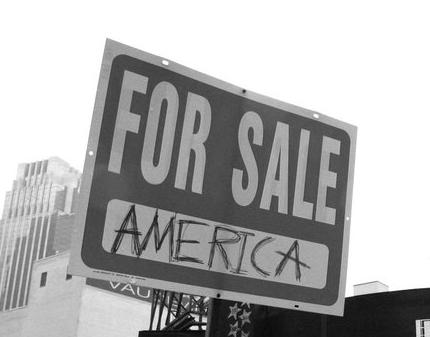
America is for Sale


General Motors and the road to foreign corporate take over of domestic assets


It appears that a little known medium sized Chinese car company, Tengzhong, has acquired the Hummer brand and its American based production facilities. Although there are doubts on how effectively it will run the operation, the fact remains that foreigners will be trying to improve on the quintessential icon of gas inefficiency and resell it back to Americans. Considering that Tengzhong wants to enter the military market to sell hardware to Chinese military, Westerners buying the new Hummers will be indirectly improving effectiveness of Chinese military-industrial complex. Before the stock market crash, the Hummer brand was in the lowly 500-700 million dollar range due to high oil prices. In post-crash America, the Chinese were able to acquire it for about 100 million which is nothing since Chinese state banks often help fund such strategic purchases through favorable loans.

Details are now emerging about the sale of GM's European branch and biggest car company in Europe, Opel. GM's bankruptcy shifted company's resources to core American based assembly lines. Federal authorities will try to engage in rapid retooling of GM's surviving industrial core for production of next generation electric exports. In the meantime, all the assembly lines, car models, and remaining infrastructure will be sold off. Opel has been acquired by a coalition of Sversbank ( a Russian state bank), Magna ( a Canadian car parts company), and German workers unions with help from the German federal government. Last year, Opel opened a brand new car production line near St. Petersburg hoping to make money from growing sales in a booming oil economy. What ended up happening is that the government of the target economy now has controlling stake in Opel itself with access to all its infrastructure in Europe and with political support from Berlin. By creating a coalition of mutual interests of corporations and governments of America's allies, Moscow was able to swallow up GM's main expansion at incredibly low historical price. Chinese will undoubtedly follow such an example in trying to acquire American corporate infrastructure in their part of the world.

It seems that the Sino-Russian goals are rapidly moving beyond attracting foreign companies to open factories on their land to reduce import monetary outflow and create jobs. Increasingly, it seems that creating incentives for foreigners to open factories in China and Russia was the first step towards long term increase of intracorporate influence. This was best demonstrated when the British oil company, BP, made a partnership with Russian oligarchs by creating an expansion TNK-BP. It didn't expect that a few years down the road their partners will wrestle away control of the expansion and then do what they like with it. This situation twists the arm of the original investor. Since the expansion is not being crudely nationalized in the style of Hugo Chavez, the investor is still receiving increasing profits. Selling the expansion would cut off the flow of profit and allow the natives access to expensive infrastructure at fire sale prices. Sunken costs are too great of a motivator. Profit based strategy requires keeping of the expansion and even increasing technological and expert aid to make sure the rogue branch prospers. TNK-BP is now the third largest oil company in Russia and in the process of opening up brand new oil fields. As its wealth rises, its management will continue to have access to cutting edge technology from the parent company as well as increasing ability to buy Western technical/managerial talent and overall company shares.

GM and Opel show that it is possible for Chinese and Russian societies to compete without necessarily starting from scratch and creating their own technologically advanced international giants. All they have to do is acquire state aid for a large enough company that can make a domestic partnership with a foreign company's expansion. This process creates a very profitable expansion that is under control of governments working towards a multi-polar world. It allows not just rapid technological transfers and business know-how but indirect influence over Western governments through corporate proxies. Major industrial giants will pressure their respective governments to go easy on Beijing and Moscow in terms of protectionism, trade, and geopolitical policy. The recession has shown that the final strategic outcome of this can be full take over of Western corporations from within and on their own soil. Once Chinese and Russian corporations (that are often directly tied to their country's military-industrial complex) employ sufficient numbers of American workers and have sufficient mutually interested American allies in the corporate world, their influence would be very difficult to counter. United States and British governments are not structurally designed to counter corporate influence and they don't have enough monetary savings to effectively counter corporate influence even if they had the will.

Conceivably it is very possible for America's geopolitical competitors to buy out and then dismantle American infrastructure citing reasons of "inefficiency". This was a tactic done by General Motors in its early heady days when it bought railroads and trains just to dismantle them and promote its own cars and buses as the best transportation method. Unlike such sabotage being done by a domestic company, possible future sabotage would be done by Chinese (who still have not forgiven American led NATO for killing a million of their men during the Korean War and funding of Chiang Kai Chek during the civil war) and Russians (whose last 5 years focused primarily on systematic multifront revenge for NATO's betrayal in the 1990s).

Over 20% of American steel industry is already primarily owned by Russian steel firms led by Oleg Deripaska. This foot in the door occurred with first cheap sales of steel and then joint take overs of mills and processing facilities on American soil with local corporate partners. The subsequent investment and creation of jobs, combined with American oligarchal allies, allowed influence over local and state governments for further expansion.

Last year, George Bush has signed a deal allowing Russian mining companies to sell uranium to US nuclear plants for the first time in history. The same process that occurred with steel is about to be repeated within a strategic sector necessary for nuclear weapons manufacture. Chinese have not yet made similarly disturbing moves ( from the perspective of nationalist geopolitical survival), although they have twice as much money as the Russians to play around with. This is perhaps because their intracorporate take over attempts will be within the irreplaceable computer and bio-pharmaceutical sectors. After all, important mineral wealth can always be acquired from other sources but a Chinese take over of a company like IBM would allow rapid international rise in prestige.

As of today, America's strategic enemies are rapidly isolating US economy by making alliances with Japanese, Canadians, Persians, Arabs, Germans, French, Indians, and South Americans. Both Beijing and Moscow however will need to act quickly enough to transfer enough technology and wealth out of United States before the depression born nationalist fervor allows for US Federal government to nationalize or otherwise counter foreign influence. It is not yet known what degree of foreign ownership of key industrial and resource sectors the American public will tolerate.

Stumble Upon Toolbar