THE FUTURE IS RUSHING UPON US

We're in for a wild ride. Exponentially accelerating technological, cultural, and socioeconomic evolution means that every year will see more developments than the previous one. More change will happen between now and 2050 than during all of humanity's past. Let's explore the 21st century and ride this historic wave of planetary transition with a confident open mind.

Showing posts with label transportation. Show all posts

Sunday, October 7, 2012

Eurasian Railroad Development

in a bit saner world...
Beijing to London freight delivery in 2 days as well as peaceful integration of Middle Eastern economies are some of many possibilities. Recent APEC meeting in Vladivostok should accelerate the long awaited development of Trans-Asian Railway project. 


Developing infrastructure has always been risky if you're not well protected by geography or by standing armies. The German-Ottoman/Baghdad-Berlin railroad link construction plans threatened British shipping interests and thus helped start the 20th century. And as Libyan experience shows, any small country outside Western alliances determined to become the "next Norway" of this or that particular region has a high chance of being bombarded by warplanes.

Having said that, transportation links are as essential as monetary unions when it comes to strengthening regional political integration. This point has been brought so often on this site that we may as well be called The Infrastructuralist. In fact, current political gridlock and disunity within USA would be a lot less intense if this union put as much effort into high speed freight/passenger delivery as is usually put into decades long military occupations. Transcontinental railroad continued being built even during American civil war and was instrumental in political integration of United States. That was big for its time but the key issue of the 21st century is connecting and creating harmony between the various poles of the multipolar world.

This primarily means socioeconomic and cultural integration of Asia and the West the way California, Texas, and New York (and more recently, France and Germany) have been united by transport. Elites understand the supranational symbiosis that transportation links bring and even the potential for a larger and more dynamic economy to swallow up neighbors. Because of that, we often even see reluctance to begin projects such as the Korea-Japan undersea tunnel even if it is mutually enriching.

Such notions need to be put to rest. Fears of freight links are not the same as fears of removing all trade protectionism. Tight railroad links and busy rail arteries can co-exist wonderfully with 20% tariffs (as shown by repeated successes of protectionism over the last 200 years). What is more dangerous than easy freight movement among neighbors is not so much mutual digestion by historical enemies. The danger is that lack of cooperation on transnational freight movements creates:

1) Economic and popular disharmony potentially leading to violence (some blood vessels in the regional body blocked, some deprived, some oversaturated, some non-existent, etc. inefficiencies, inequalities, bottlenecks, and chaos is the order of the day)

2) Stops spin off processes from getting off the ground whether economic (creating cooperation where economies of scale can be tapped) or political war averting ones (see below)

Full high speed railroad Eurasian integration is the obvious next step that United Nations saw as an essential violence preventing project for the largest land mass on earth. Projects of this nature always require soothing relations beforehand. Obviously Pakistan and India need to find ways to cooperate, as well as South and North Korea, Japan and Russia, Japan and South Korea, Iran and Arab neighbors, Israel and Egypt, Armenia and Azerbaijan, Georgia and Russia, Turkey and Russia, and Afghanistan sufficiently stabilized so as not to build railroads and pipelines around it.

In effect, in a world with nuclear weaponry, the shareholders of various railroad monopolies have to pressure for peace in order to get more business. High level governmental working groups approaching something as mundane as transborder high speed railroad development create a foot in the door towards preconditions for peace. Seoul and Pyongyang seem to be the early adopters of this understanding with railroad construction connecting their two countries (along with a free trade zone lubricating the project) being used as an ignition towards eventual reunification. Although some critics point to France and Germany being the most interconnected in terms of transportation in 1913, interdependence before conflict appears more of a historical exception rather than the rule.

post-scarcity civilization will think of how to tap
and transport resources from still
overlooked northern peripheries
Considering the current historical conditions in the Middle East (a patchwork of barely consolidated "states" each in its own historic development that roughly mirrors Europe anywhere from 1850s to early 20th century), a supranational government approach combined with links to indigenous civil society and business groups with infrastructuralist mindset and demands is essential to potentially prevent early 20th century Europe 2.0.

Let's quote from a previous article that compared 3 fastest rail lines in the world to better grasp a future Eurasian land bridge.

"The "best" is determined here by a combination of:

A) Average speed in between terminating points since the faster the distance covered, the more a train system cuts into air industry's profits. This in turn pushes airplane makers to conceptualize cheap travel by hypersonic passenger aircraft which in turn benefits humanity.


B) The distance that the high speed line covers since the longer the line, the bigger the project in terms of resources and parts and the more economies of scale are utilized. A society's commitment to triggering economies of scale for heavy industry shows its determination to improving the welfare of its citizens. Ultimately, going as big as possible with infrastructure projects (see Erie, Panama, Suez Canals and Transcontinental/Trans-Siberian railroads) is not just cheaper but creates mass employment (during transition to post-scarcity mechanization), rapidly stimulates real physical economy, and gives a super boost in wealth creation."


Industrial cartels behind the Chinese government also seem interested in free trade zones at the end of 3 major high speed Eurasian railways that are being proposed. India and southeast Asia being China's South America and Russia being China's Canada appears the immediate future for the region. Beijing needs to approach the situation in an integrative developmental language that FDR would have used to build common prosperity and avoid the imperialist mindset. The possibilities of freight entering North Korea from Russian Federation and then entering South Korean land to continue on via the underwater tunnel to Japanese consumers would do more for peace than 6 party talks ever did. Recent decision by the Kremlin to forgive 11 billion dollars of North Korean debt appears to be part of this particular mission. Energy and transportation projects can go through when borders are finally delineated and decades long issues forgiven. The Christian Orthodox Patriarch on a visit to Poland recently used the word he considered the most important. It was "forgiveness".

An economically booming region connected by Beijing, Tokyo, Taipei, Seoul, Pyongyang finally healing with high speed transport links would be an example to follow across the world from central Europe to Middle East to Africa. It is said people get used to a good thing very quickly and the Customs Union between Russia, Belarus, and Kazakhstan demonstrates that as passengers don't worry about being searched and stopped as their train crosses the border. As Mexico continues to grow in economic power, eventually the planners behind North American Union need to consider similar easing of restrictions and add high speed rail in addition to the high speed highway linking the continent.

Besides break of gauge, the way high speed tracks should be constructed should take into account possible future conversion to Mag-Lev standard. This means wide clearance around the track to allow parallel Mag-Lev construction once sufficient number of fission reactors are built to support it. Dual use construction or built in expansion for potential dual use is essential. Any type of transcontinental infrastructure built in 21st century should have major upgrades in mind to save on costs. Historically, once a major project begins, the tools for it itch to find use elsewhere as the pipe laying ships for Nord Stream already want to be used to lay pipes between Russian far east and South Korea and Japan. Initial investor capital creates a critical mass and a snowball effect for specialized machinery built for the original task. Governments and sovereign wealth funds are essential to create this type of ignition. Elites like Sarkozy, various think tanks, and The Pragmatist itself have already discussed an international Tobin tax to fund a truly global infrastructure development bank. It would rapidly help in what was previously thought as unapproachable "mega" projects such as terraforming the Sahara Desert, Gobi Desert, Central Asian Desert, etc.

2-3 trillion dollars (or 4% of world's GDP) to properly connect the far East and Western Europe will rapidly pay for itself through reversal of austerity mindsets, direct energy savings for the most populous landmass on earth, airplane construction cartels finally pushed towards development of cheap hypersonic freight and passenger jets, and greater lubrication for business than even economic and monetary unions. Even if European Union got its finances in order, it wouldn't function well if people still used horses and buggies. At the risk of the article sounding like another high speed commercial, there are also possibilities for passenger (and even freight trains!) that are always in motion and that unload their cargo onto another regional/city train system. Schemes like this can make high speed function smoothly with normal speed as well as allow experiments for non-stop high speed train systems of smaller size to operate within large urban areas.

As Immanuel Wallerstein's World Systems Theory and global climate change efforts (requiring world climate system approach) take hold in popular imagination, we'll see world systems finally applied to planetary transport and energy grids as we progress further.


Stumble Upon Toolbar

Wednesday, February 24, 2010

Fastest Train Lines in the World


In the spirit of the previous pro-infrastructure article, lets take a look at the best high speed train systems in the world. We'll go by the widely used definition of high speed as at least 200 kph/125 mph. The "best" is determined here by a combination of:

A) Average speed in between terminating points since the faster the distance covered, the more a train system cuts into air industry's profits. This in turn pushes airplane makers to conceptualize cheap travel by hypersonic passenger aircraft which in turn benefits humanity.

B) The distance that the high speed line covers since the longer the line, the bigger the project in terms of resources and parts and the more economies of scale are utilized. A society's commitment to triggering economies of scale for heavy industry shows its determination to improving the welfare of its citizens. Ultimately, going as big as possible with infrastructure projects (see Erie, Panama, Suez Canals and Transcontinental/Trans-Siberian railroads) is not just cheaper but creates mass employment (during transition to post-scarcity mechanization), rapidly stimulates real physical economy, and gives a super boost in wealth creation.

As such, these 3 lines satisfy the criteria for greatness:

1) Wuhan-Guangzhou High Speed Line (China)
(922 kilometers and longest in the world)

Fastest rail line in the world going an average of 194 miles per hour(313 km/h)! Think of the inefficiency and time spent going to/from airports. The waiting to get on the planes and scanned/handled like cattle or being stuck in car traffic interrupted by a maximum speed limit of 55 miles per hour. The Wuhan-Guangzhou line uses two trains: CRH2 and CRH3. It opened for business just a couple months ago so you're looking at the cutting edge conventional non-magnetic land transport in the world.


2) Paris/Lyon-Marselle/St Charles TGV High Speed Line (France)
(750 kilometers long)
(Average speed between end points is 250 km/h or 155 mph!)

France hasn't been idle. They have beat the Chinese in test run speed records (even if now recently second place in average speeds for daily use) and seem determined to become European leader in train infrastructure. They are definitely in a good geographically central position to link up Spain's and Germany's growing networks. All their investment in nuclear power (close to 80% of France is nuclear powered) only helped with these energy intensive projects.


3) Shin-Osaka - Hakata Line (Japan)
(554 kilometers long)
(Average speed between end points: 242 kph/150 mph!)

Japan's Nozomi Shinkansen continues to deliver with a respectable third place. Japan was one of the world's earliest innovators in high speed train technology and is now in the process of moving on to large scale MagLev. This society's territory is one of the best networked in the world and yes, the are heavy into nuclear power as only fission today can deliver the power for true citizen comfort and land travel affordability.


Most of the world's homo sapiens have seen trains like these in science fiction movies and it is hard to wrap one's head around the sheer speeds these land rockets bring. It was really mind blowing to find out that some Chinese airlines cut their fares up to 80% to compete with the newest lines. Looking at these heavy industry marvels (operating on just standard rail gauge!) gladdens the heart and shows that macro scale technological and social progress continues at least in some regions of the planet. Japanese and the French are edged out of the top rank for now since Chinese started building their networks later and thus had newer tech in mind and on hand. We can ignore the magnetic levitation trains at the moment because they are still used on relatively short routes from airports and such.

China now has the world's longest high speed train network at 3,300 kilometers of high speed track as a sum of a number of prominent lines. Japan (2,459 km), France (1,700 km), Germany (1,290 km ) and Spain (1,270 km) follow behind. If one looks at populations of these countries however, France dominates with about 38,000 citizens per kilometer of high speed line while China lags far behind with 400,000 citizens per kilometer. France if of course helped in this since it has the highest % of its energy derived from a modern indigenous nuclear power plant system (it is no wonder why neutral Switzerland and France's neighbor was chosen as the site for the world's biggest and most energy intensive supercollider). Nuclear power infrastructure always goes hand in hand with next generation transport systems.

Shockingly, India, Russia, Brazil, and United States do not have any high speed lines at all as one would expect from countries of such geographic and economic size. We can expect a massive wealth outflow from them in the near future as they try to catch up by buying foreign technical help and/or fleets of trains. Of course it is still rather silly to see engineering marvels on dingy normal rail.


It makes a lot more sense for societies that lag in high speed networks to go straight into MagLev and go into it big. Here is a glimpse of the future spanning entire continents (and yes freight train MagLev will make deliveries of heavy industry parts more efficient than ever):


Stumble Upon Toolbar

Friday, August 21, 2009

International Subway Station Comparison

After exploring the state of one subway station in Manhattan, I decided to scout the internets for subway station aesthetics of regions that are not yet considered first world. As various research explains to me, the New York Subway is in its third world state of disrepair and neglect due to the huge amount of people living in poverty and severe budgetary mismanagement/corruption by public officials and elites. So I decided to explore the visuals of subways and metros from the key cities in BRIC (Brazil, Russia, India, China) block of developing nations since they are affected by similar problems to a larger degree.

CHINA SUBWAYS:

Beijing Subway (no this is not a set from a science fiction movie but an ultra sleek subway system that makes you feel that you're in an airport or a spaceport)


Shanghai Metro


Nanjing Metro


Guangzhou Metro


RUSSIA SUBWAYS:


Moscow Metro ( not this is not a modernist museum or some ancient castle but a subway system started in the 1930s)


Saint Petersburg Metro


Kazan Metro (capital of Tatarstan, a Muslim flyover province)


BRAZIL SUBWAYS:

Rio De Janeiro Metro


Sao Paulo Metro


INDIA SUBWAYS:


Delhi Subways


OOOPS!! Turns out that was not some slum in India but actually New York City stations in United States of America. Lets try this again.

INDIA SUBWAYS:


Delhi Metro


Well turns out Mumbai and Bangalore don't have an active metro system just yet but are building it. When it is completed, Bangalore for example, will have metro stations that look something like this according to the conceptual art:


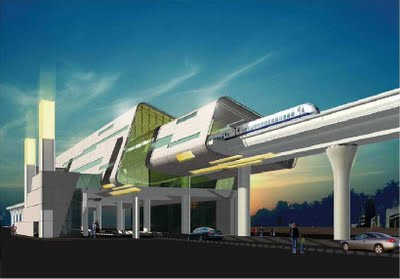
Ah! My mistake again. I mixed up the conceptual art for Bangalore with 1990s designs which envision how Bronx and Queens stations will look like in 2009. The above are actually already built state of the art New York metro stations. Bangalore is in the process of building more third world type stations like these:


Thus concludes our quick tour around the developing world. Turns out that third world is focused too much on self respect, beauty, modernity, quality of life, and being in the 21st century. It'll never catch up with United States if it keeps building for its people and having pride. We need to explain to Chinese, Indians, Russians, and Brazilians that you can't nation build domestically like this. It is too expensive or something or other.

Either that or it is time for B.R.I.C. to become B.R.I.C.A.

P.S. Sweden beats all of them.


Stumble Upon Toolbar